In a world where the conventional notion of family often revolves around a mother, father, and children, it’s crucial to acknowledge that this ideal isn’t universal. Not all individuals are fortunate enough to experience the warmth and affection of a traditional family unit. Regrettably, many children grow up without the nurturing care of parents, deprived of the love and stability that define a happy family life. Conversely, there are individuals who, despite their longing for children, face obstacles preventing them from starting a family and showering it with love and care.
Therefore, various alternative family structures exist to foster connections and instill values traditionally associated with family life. In Ukraine, one such model is family-type children’s homes (FTCH), designed to supplant orphanages entirely. These homes constitute distinct families formed by couples or individuals who open their hearts and homes to a minimum of 5 orphaned or parentless children. Essentially, they function as expansive foster families, offering care and support to those in need.
The inception of family-type children’s homes (FTCH) in Ukraine dates back to 1988. With governmental support for alternative orphan care models, this initiative swiftly flourished. By the close of 2008, Ukraine boasted 400 FTCHs, nurturing 2609 children. This approach emerged as a commendable substitute for traditional orphanages and boarding schools.
However, the outbreak of war in Ukraine brought serious challenges for these expansive families. Families living in areas affected by the war or near the front lines had to leave their homes and belongings behind and move to different regions of Ukraine to start over. Yet, even in relatively secure areas, the impact of the full-scale war was deeply felt. Families faced lower incomes, higher prices for essentials, frequent power outages, security worries, and limited access to education and healthcare services. Furthermore, many families assumed the responsibility of caring for children with special needs, some of whom faced mobility challenges.
For over 12 years, the Vasilyeva Galina family-type children’s home in the Kherson region has been nurturing nine children. This family once enjoyed a comfortable living standard and excellent conditions for children prior to the war.
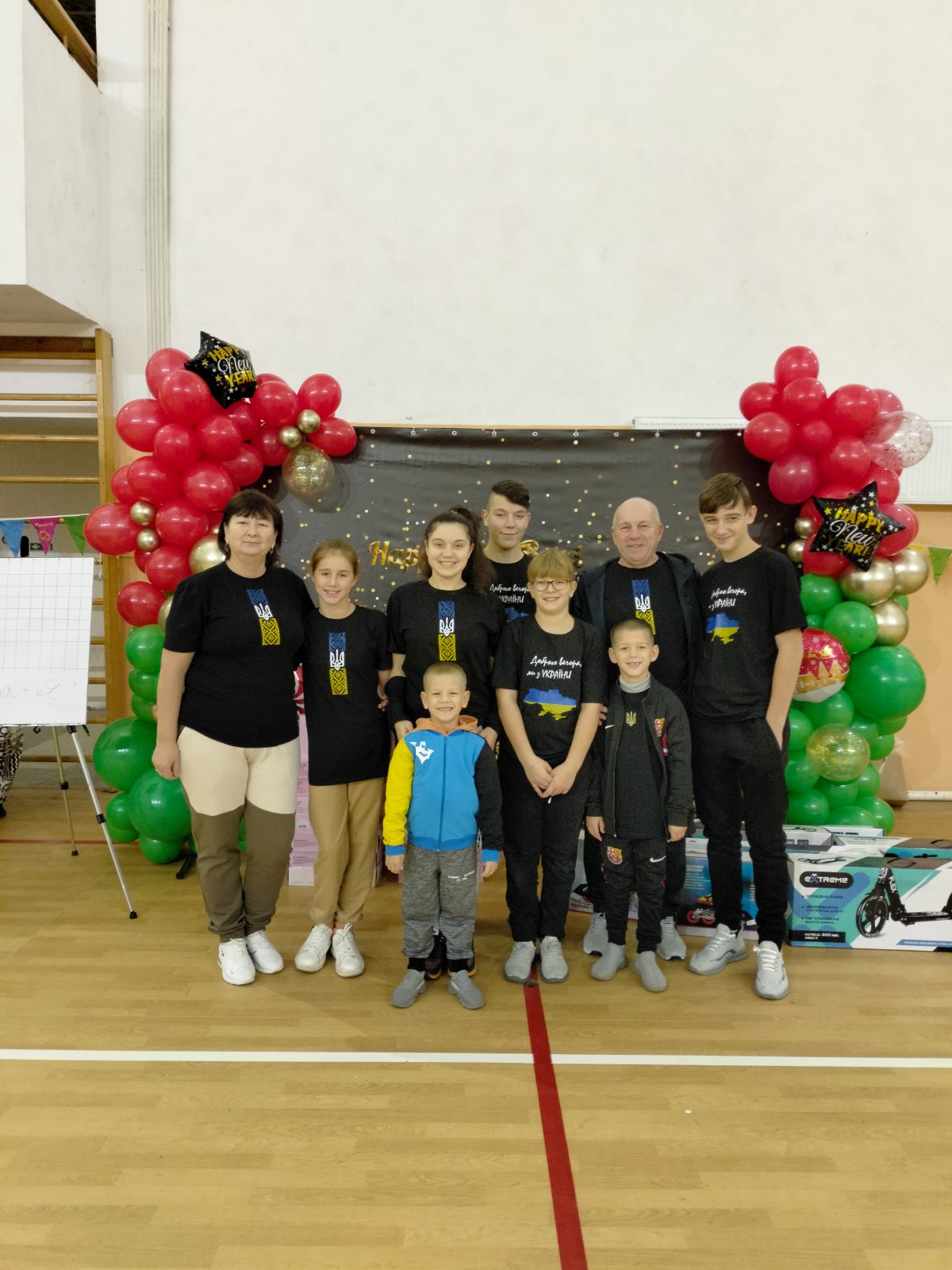
We had a spacious house with a pool, schools and clubs for children. However, during the nine-month occupation in the city of Berislav, Kherson region, we faced unimaginable challenges. Hiding in basements, we sheltered the children while a tank stationed outside our gates aimed its gun at us. We encountered various people, including Burmese, Chechens, and Kadiri, who brought terror through hunting Ukrainian patriots and relentless checks. Living without electricity and water, we resorted to drinking water from the pool. With no money, we sold everything we owned just to afford food and milk. It was a harrowing experience marked by explosions and the buzzing of drones. Despite our efforts to leave, we were hindered by the high costs and threats of having our children taken to Russia if we surrendered their documents. Now, in the Dnipropetrovsk region, we reside in a rented apartment with nothing to call our own, having been evacuated without any belongings
Vasilyeva Galina
Anna Shatyrko, a mother-caretaker of a family-type children’s home in the Chernihiv region, has been raising two biological and eight foster orphaned children for over a decade. However, the war has inflicted profound tragedy upon all of Ukraine, this close-knit family was particularly affected.
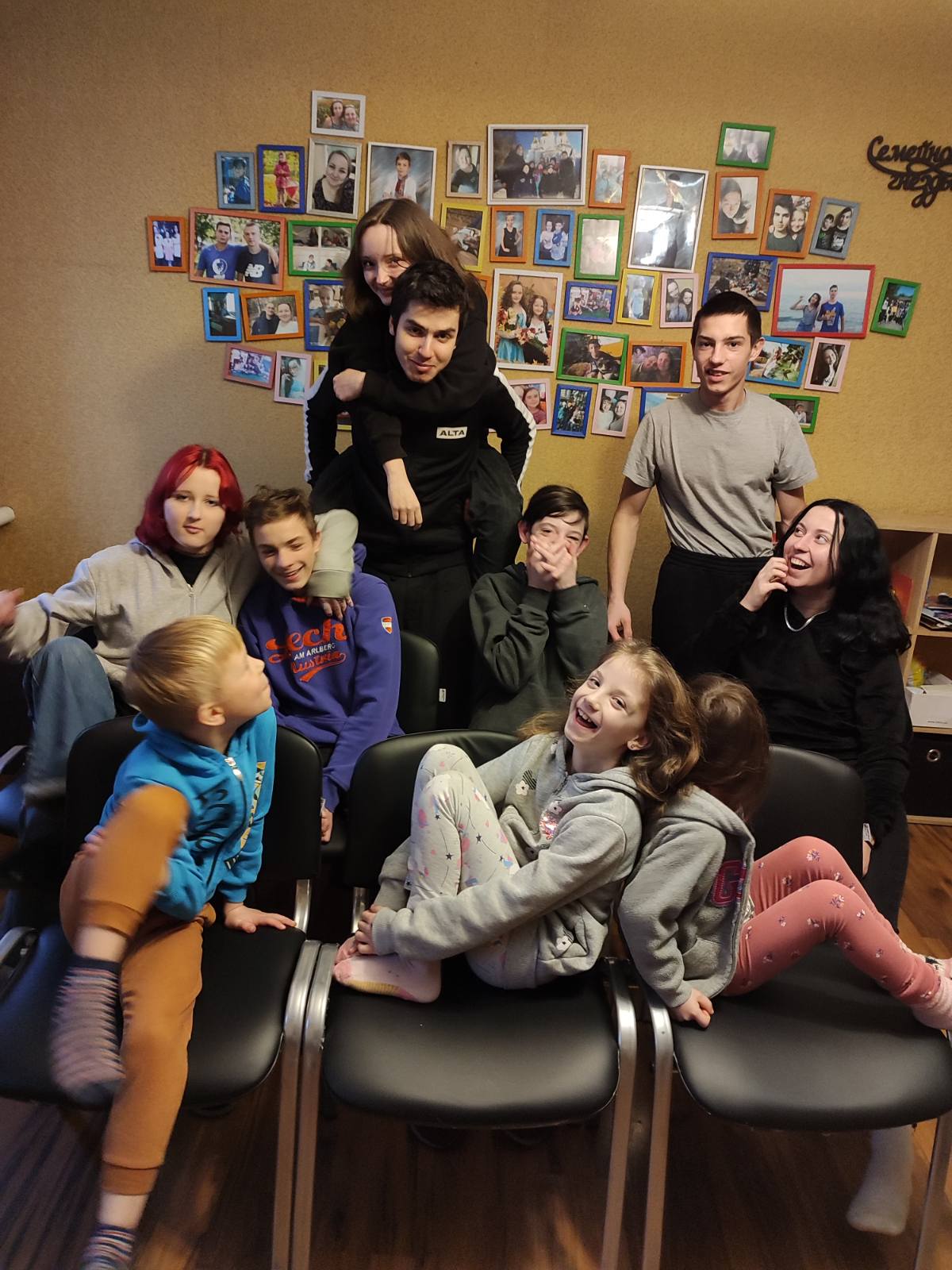
Direct hostilities in our village led to a 30% damage to our house. After months without heating, the situation worsened, causing critical dampness and mold issues in our home. Almost all our furniture requires replacement, and during our evacuation, our home was heavily looted. In the summer, shelling of the country’s energy infrastructure and voltage surges resulted in a fire in one of the children’s rooms. Despite our continuous efforts to restore our home and make it comfortable again, it requires substantial resources. Nevertheless, I remain hopeful that our family nest will once again radiate happiness and love. During our family evenings, we dream and plan for a cozy, restored home, but this journey is undeniably challenging
Shatyrko Anna
And such stories, unfortunately, are numerous. Therefore, in 2023, we established a program to support family-type children’s homes, aiming to provide effective assistance to families in all war-affected areas across Ukraine.
Throughout the year, we’ve aided 51 large families with foster children, ensuring they meet their basic and emergency needs. This support has not only contributed to the improvement of their living conditions but has also provided crucial assistance during challenging times. To gain deeper insights into the situation and the challenges faced by such families in Ukraine today, we conducted surveys among parent-guardians. The results revealed the following:
-
 60 % of family-type children’s homes do not receive adequate assistance from state authorities, social services, charities, etc., to support both their homes and the children under their care.
 -
 During the war, state funding for child maintenance decreased by half due to the foreign exchange rate increase relative to the hryvnia. *
 -
“How can they help us when they have no funding?” (many families find themselves asking)
-
In most cases, we handle everything independently; we’ve relocated, secured housing, and manage all aspects necessary for the children’s well-being on our own
-
While we do receive payments, they are inadequate when considering the rising costs of utilities and food products *
-
Three of our children have disabilities and require costly medications, which we have to purchase out of our own pockets
-
State aid for children falls short of supporting comprehensive child development *
-
The current payment structure doesn’t cover all the expenses needed to run family-type children’s homes *
-
* Assistance amounts are contingent on the subsistence minimum and, in 2024, stand at 6407 UAH for children up to 6 years old, 7990 UAH for children aged 6 to 18, 8970 UAH for children with disabilities up to 6 years old, 11186 UAH for children with disabilities aged 6 to 18, 7570 UAH for students aged 18 to 23, and 10598 UAH for individuals with disabilities from childhood (students) aged 18 to 23
-
 35 % of family-type children’s homes have their housing; the rest must rent or live in temporarily provided accommodations
 -
 55 % have individuals who require special support or attention, often due to specific needs or medical treatment
 -
 13 % of parent-guardians assess their financial situation as sufficient for food but challenging when it comes to buying clothes, shoes, toys, and other necessities for their children
Despite family-type children’s homes generally receiving support from the government, charitable organizations, social services, etc., they still require assistance for several reasons. Firstly, the needs of such families are enormous. Each family typically has 8 children on average and must ensure their comprehensive development, including education, the development of various skills and talents, and promoting their physical and intellectual growth. Additionally, children require stable leisure time, which contributes to their social and emotional development. It is also important to take care of each child’s health, which involves providing medical care, regular check-ups, adequate nutrition, and participation in sports activities. Currently, child safety is also a pressing issue, leading many families to evacuate to relatively safe areas, resulting in various difficulties.
Additional resources, attention, and support from society play a crucial role not only in ensuring that every child in FTCH can grow and develop in a safe and supportive environment but also in fostering the creation of new families. It is necessary to emphasize the value and importance of FTCH in the context of building the future of our country. Comprehensive support should be demonstrated to reassure parent-guardians about taking on such responsibility. Efforts should be made to ensure that the maximum number of children are raised in a family environment because a family provides support and more development opportunities, and prepares children for independent living. It is worth noting that FTCH operates in a way that does not separate large family groups; siblings live and are raised together in one family, preserving family ties.
As of September 26, 2023, according to data from the website of the Ukrainian Parliament Commissioner for Human Rights, there are currently 1,314 family-type children’s homes in Ukraine, accommodating 9,084 children. Additionally, 15,697 children are registered for adoption.
Unfortunately, the prolonged war in Ukraine leads to an increase in the number of children left without parents. In this context, FTCH can become social and family institutions that provide support and a healthy family model for these children. Therefore, supporting and developing family-type children’s homes is an integral part of the strategy for building Ukraine’s present and post-war future and is one of the priority areas of our organization’s work.