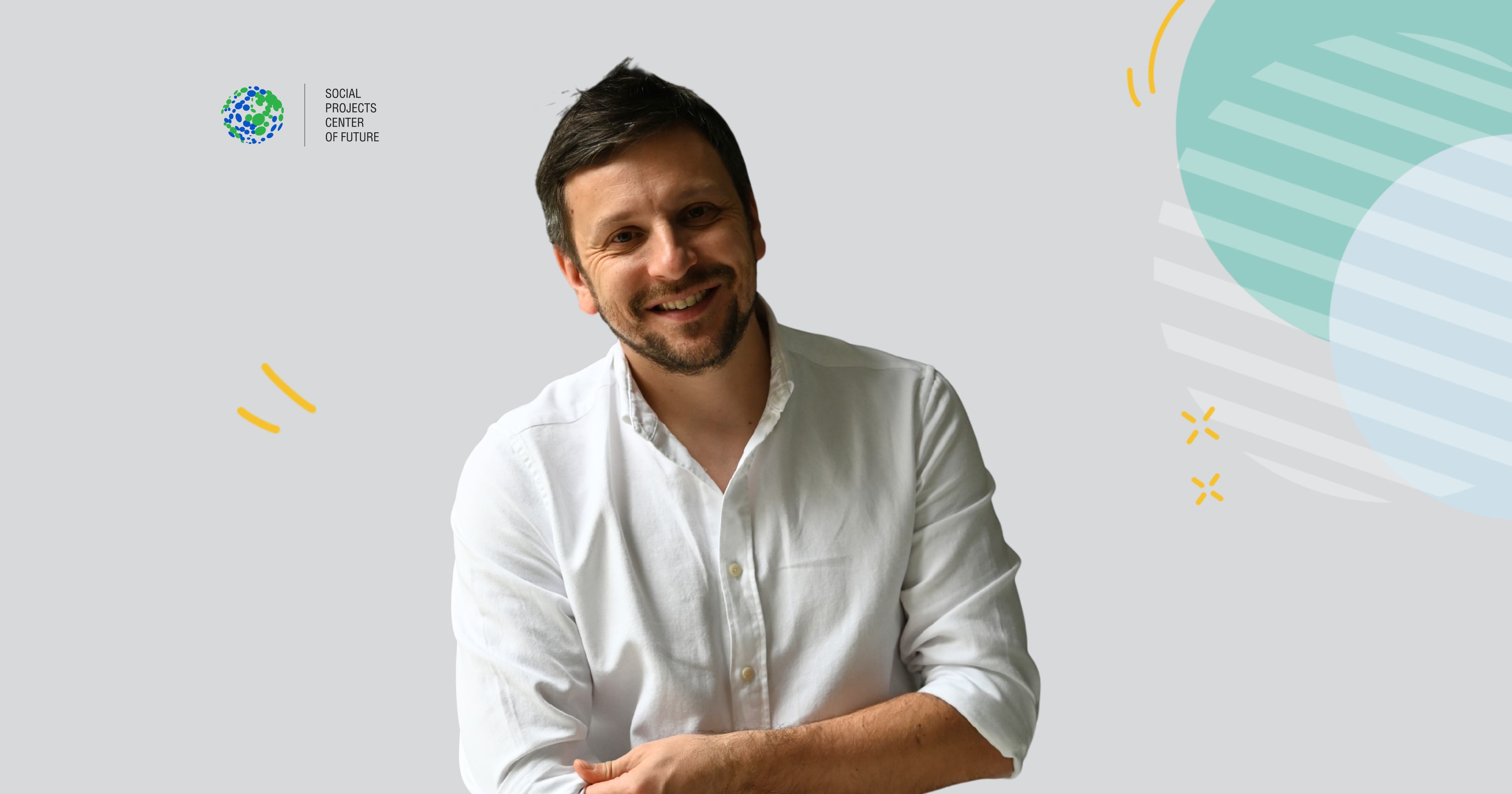
Kateryna Zahorodnia, head of the Center for Physical and Rehabilitation Medicine in Ivano-Frankivsk, talks about the daily challenges doctors face.
The war changed everything
Yes, military actions make terrible adjustments to life, and the work of hospitals today is also aimed not at treating ordinary injuries, but at eliminating the consequences of horrific injuries from missile fragments and shock waves.
The Ivano-Frankivsk Regional Clinical Hospital can accommodate up to 800 people at a time. The facility has 36 departments, 22 of which are surgical.
The hospital receives evacuees. Here they receive the necessary help and then undergo rehabilitation at the Center, which is headed by Kateryna Olehivna, a former gastroenterologist and now a doctor of physical and rehabilitation medicine, who, together with her colleagues, is giving the wounded back their future.
Currently, the Rehabilitation Center is working with 140 patients at a time. Some of them stay here permanently, 25 come for outpatient rehabilitation.
A multidisciplinary team of 55 rehabilitation specialists works with them, devoting at least an hour to each patient every day.
“The flow of patients has not only increased since the beginning of the war, but has also changed significantly,” Dr. Kateryna Olehivna notes. In the past, the specialists’ work was mainly aimed at restoring post-stroke patients, and only a small part of them had limb injuries, but now 75% of the patients have serious traumatological and orthopedic injuries.
Injuries of this nature include damaged nerves, barotraumas and several fractures (including non-consolidated ones) at the same time – all in one person. Sometimes there are so many injuries and they are so serious that it is difficult for doctors to decide which of them to treat first.
Development through the exchange of experience
A rehabilitation specialist in Ukraine can be called a pioneer, because this science is still very young in our country. Therefore, specialists are mostly trained abroad, and upon returning, they are sure to share their knowledge with each other and colleagues from other institutions.
Being one of the largest Ukrainian teams, the Ivano-Frankivsk Center’s staff continues to grow and has added another 10 employees over the year. Over the past two years, each of the specialists has completed an internship abroad at least once – in Germany, Italy, Denmark, Norway, Spain, and the United States.
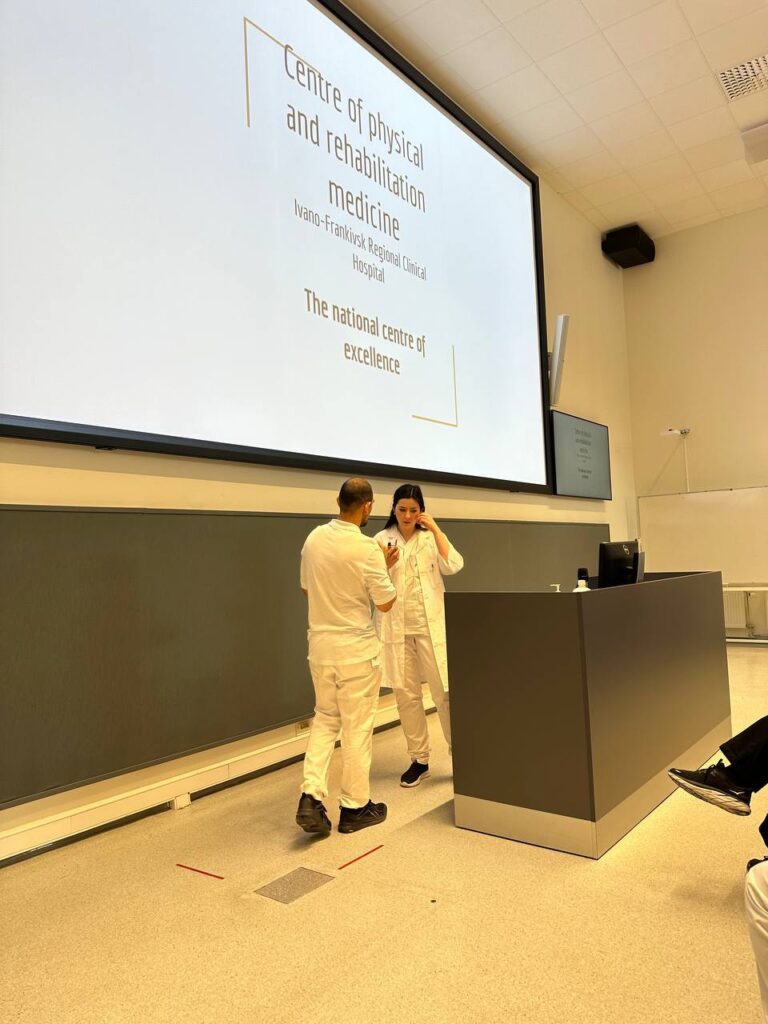
Teams of rehabilitation specialists from different regions of Ukraine actively communicate with each other, sharing their experience. Therefore, if we proceed from the generally accepted idea that knowledge is a treasure, then collegiality is a way to increase capital. Mutual support between specialists is especially needed where decision-making is not possible according to the usual scenarios. When you have to achieve new goals almost every day and face difficulties that did not exist before, the experience of your colleagues becomes invaluable.
Cooperation between the Center of Physical and Rehabilitation Medicine in Ivano-Frankivsk and the Social Projects Center of the Future
The rehabilitation center in Ivano-Frankivsk received support, and the work there has reached a new level. In particular, the rehabilitation center was provided with a new electroneuromyograph, a device that helps diagnose nerve and tissue damage more accurately and quickly. The institution had one such device, but it was not enough and patients had to wait two weeks for an examination. Two weeks of valuable time were spent waiting, and during this time a new orthosis could have been prepared or serious rehabilitation work could have been done.
While waiting for the examination, work with the patient is also carried out, but often it does not bring the desired result, because doctors are unable to determine in which direction to move – whether to restore sensitivity and function of the limb, or to make an orthosis.
An electroneuromyograph helps to determine what exactly the patient needs. If the nerve is preserved, rehabilitation measures are prescribed, and it is better not to delay it.
If the nerve damage is complete, then it is no longer a question of recovery, but of adapting a person to life with such an injury. In this case, an orthosis is made for the person, and the work proceeds in a different direction.
In any case, medical care begins with a neuromyograph examination and determination of the degree of damage to nerves and tissue fibers.
When time works against us
Although it is commonly believed that time heals, it does not. Doctors treat, and high-quality equipment helps to save time.
Kateryna Olehivna recalls a case when, while waiting in line for a neuromyograph, they worked with a patient for a month to recover, but there were no changes. The long-awaited examination showed complete nerve damage, and after receiving the orthosis, the man soon began to move independently.
The lack of timely examination increased the duration of rehabilitation and led to procedures that turned out to be unnecessary. There is also a psychological side to the problem: false expectations and lack of progress greatly worsen the emotional state of patients and undermine their faith in treatment.
That is why the staff of the rehabilitation center is so grateful to the Foundation for providing the electroneuromyograph and its consumables.
In the past, Kateryna Olehivna and her colleagues have applied to several organizations with this request, but, unfortunately, they were refused. After all, this is a specific device, and against the background of the problems associated with the military actions, it may look less important than other medical equipment. But in reality, its importance is hard to overestimate.
Today, thanks to the Social Projects Center of Future Foundation, specialists are learning how to work with this device, and these are not only doctors of physical and rehabilitation medicine, but also occupational and physical therapists. After all, this is the essence of the multidisciplinary team’s work – to enable each specialist to see the result of the work done, to evaluate the changes. And this is possible with the neuromyograph.
The purchase of the device was almost the final step in providing the Center with equipment, and now the team has the next goal – to expand and improve their skills through training.
MRI is one answer to many questions
Another great need of the institution is an MRI machine. It helps to conduct a comprehensive examination of the nerves, muscles and skeleton, and thus one session replaces the ultrasound, X-ray and electroneuromyograph examinations at once.
Patients with simultaneous muscle injuries, several fractures and traumatic brain injury are not an exception today, but a terrible reality. And a magnetic resonance imaging scanner allows us to assess the patient’s condition with a single examination.
How arm tomography helped to walk
The computed tomography machine was provided to the hospital by the state, and it is also a valuable tool in the Center’s work. Sometimes an additional examination can completely change a person’s life, as happened with one of the patients.
A civilian man was sent for rehabilitation after a pelvic fracture and lung problems.
The treatment lasted for a month and a half, and the patient continued to complain of pain in his arm, which prevented him from using crutches and moving around. A CT scan revealed a fracture, damaged muscle and nerve. So after six weeks of rehabilitation, he had to have his arm in a cast. If this injury had been detected earlier, the man would have been able to move around on crutches in a month, and his rehabilitation would have progressed much faster.
Traumas received not only in war
Most of the patients admitted to the Center for rehabilitation have extensive mine-blast injuries. One person can have a traumatic brain injury, limb injury or amputation, peripheral nerve damage or muscle tear, and possible fractures. On average, there are three or four serious injuries per patient. The flow of patients from the stroke unit located in the hospital is also considerable. The age of patients has significantly decreased since the start of the full-scale war, and the disease is increasingly affecting young people.
Doctors believe that the war is largely responsible for the high incidence of strokes. High levels of prolonged stress do not go unnoticed. Often, due to the large flow of wounded in need of medical care, other people are unable to get to a doctor’s examination in time, and this leads to tragedy.
There are more and more cases of strokes in people under the age of 60, and the percentage of post-stroke rehabilitation in Ukraine is very low.
The Center provides such patients with the maximum possible assistance.
Who in the team heals the doctors
The emotional state of both patients and doctors is very important in the rehabilitation process. That is why a psychologist takes an honorable place in a multidisciplinary team.
Working with people who have lost not only their health, but also their homes and even their families is very difficult psychologically.
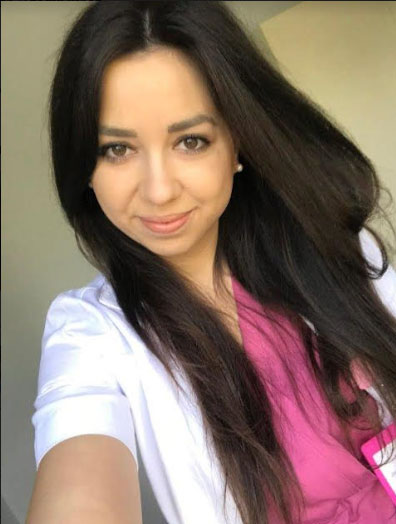
We don’t work one-on-one, we work as a team
The specialists make decisions together, share the patient’s pain with him or her, and rejoice in his or her achievements together. The psychologist works with the team members, he is also called to each patient, and all meetings on further rehabilitation actions are held in the presence of this specialist. “Mental health comes to the fore,” Kateryna Olehivna notes. After all, a person’s internal state is their source of motivation, and the effectiveness of rehabilitation depends on it.
Currently, there are four psychologists working at the hospital, and they spend most of their time here, in the Rehabilitation Center. Because their help is needed here more than anywhere else.
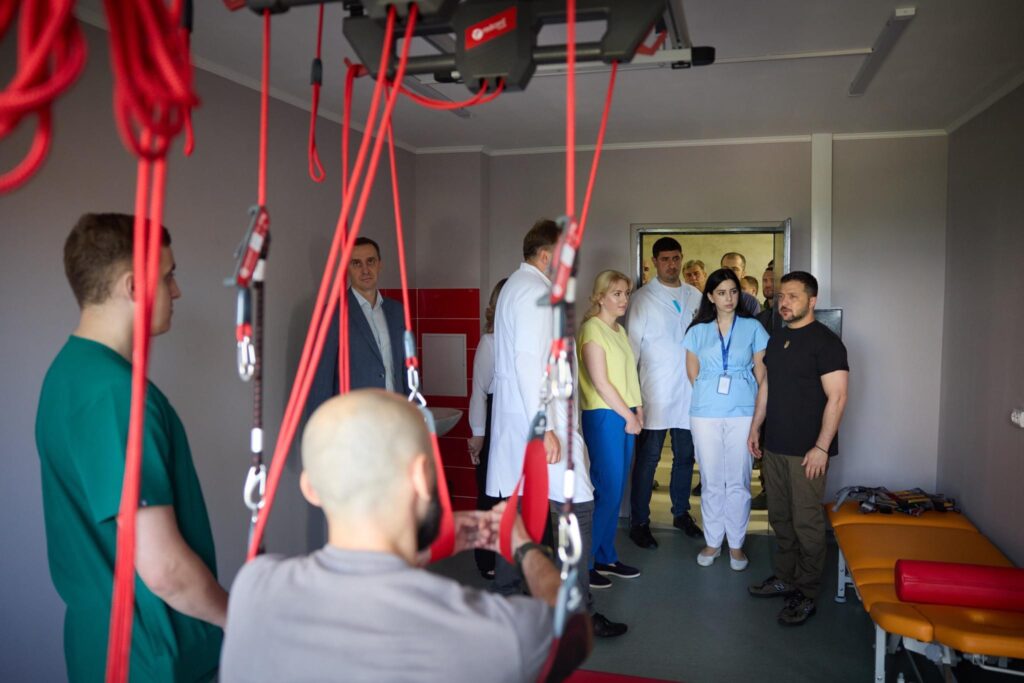
Stories that impress
It would seem that a rehabilitation facility is not a battlefield, and life here should be measured and rhythmic, but it is only an imaginary silence. As many patients as the doctors meet here, so many stories remain forever in their memory – heartbreaking, unusual, touching.
Kateryna Olehivna told us one such story.
Once a colleague, a physical therapist working in another regional town, came to the Center. He was in despair: his brother had suffered terrible injuries – amputation of three limbs.
“It happened 20 minutes ago,” the man said. The first thing he did was call the Center to enlist the support of the team.
Now his brother is undergoing rehabilitation here. He is in good psychological condition, he is motivated and the specialists are confident that he will be fine. But the trust that his colleague showed by calling the Center in the first place moved the staff to the core.
A multidisciplinary team, including a physical therapist, is working with the wounded, but it is not his brother. The brother comes just to visit, because it is not a good idea to work with family members, Kateryna Olehivna says. Too many emotions harm the result.
“Who is more difficult for a doctor to work with?” – this question we asked the Center’s staff. Perhaps, if children were treated here, the answer would be obvious – young patients are more difficult to treat and psychologically challenging.
However, this hospital does not accept children, and more complicated cases occur more often with civilian patients than with military ones.
A woman who came to the Center survived the shelling when her family was leaving the war zone. Her nephew did not – he was killed in front of her, leaving the young children who remained in her care orphaned.
The patient had suffered back injuries and was in severe pain. The Center did a lot of work with her, including a series of examinations and a rehabilitation course. The woman was very grateful for the help, she cooperated diligently, and the result was brilliant.
At the end of the rehabilitation, the doctors received a surprise – several large boxes of homemade pies from a grateful patient.
Saving lives, bringing them back to life
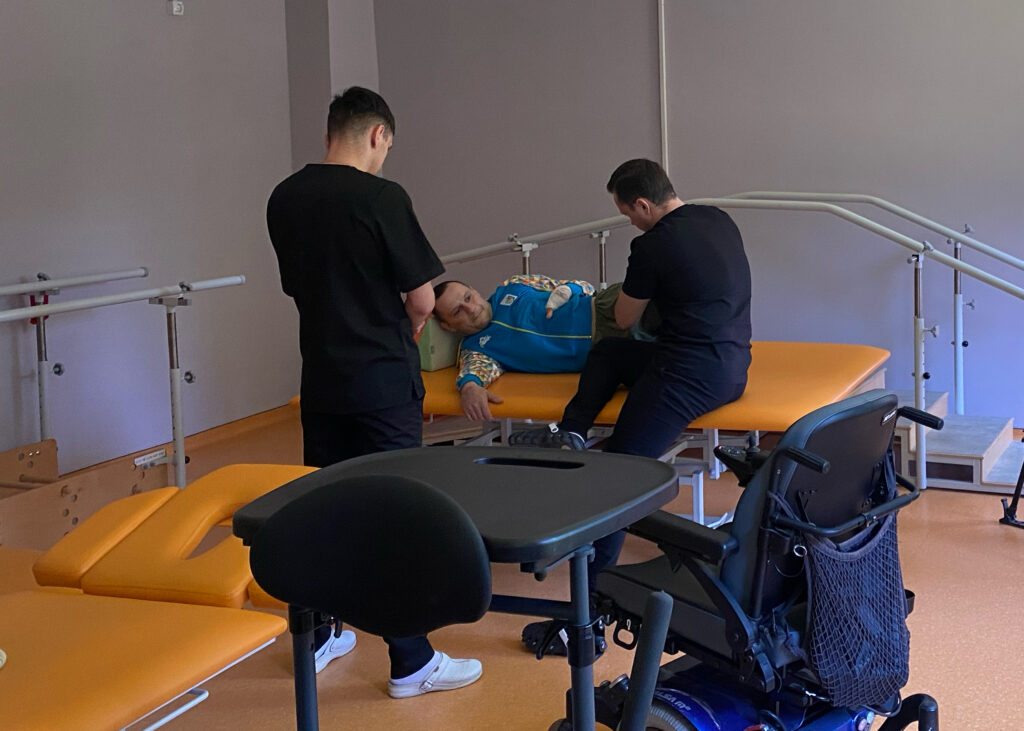
It turns out that these are different things. A person who has been wounded and is no longer in danger of death has to endure many trials to actually return to life.
Most of the patients who have undergone rehabilitation are unable to resume their usual rhythm of life and have to adapt to new conditions. In particular, these are people with spinal cord injuries and amputated limbs.
The problem is that it is not only difficult for them, but society is not ready to accept these people. Therefore, rehabilitation work is carried out in both directions, and it begins within the walls of the institution. Patients who have already been discharged come to support others with the same injuries as themselves and share their experiences.
It may sound strange, but the way others communicate with a veteran can hurt, even if they are motivated by the best of intentions.
People do not realize that attempts to help when they are not asked to do so offend. A person remains a person even after losing limbs, and he or she is able to ask for help on his or her own if the need arises. Inappropriate attention and compassion are more harmful than indifference.
Creating jobs for people with disabilities remains a huge problem. Most employers are not ready to hire them, believing that they need to create numerous special conditions, but this is not the case. These people can do much more than it seems. A vivid example is a defender with an amputated lower limb, a former patient of the Center, who now works in the regional council. He has a responsible position for working with veterans in Ivano-Frankivsk region and is working on the issue of their integration and adaptation into society.
“So we are not preparing a veteran, we are preparing society to accept him or her,” says Dr. Kateryna Zahorodnia.
The region is also considering the possibility of re-profiling former patients, giving them the opportunity to learn a new profession by getting a professional education. Among the possible specialties are even lawyer and massage therapist. After graduation, the veterans will be able to work at the Rehabilitation Center, as they are the best at understanding and finding an approach to patients.
It is the defenders who were wounded on the battlefield who have the hardest time adapting. Among civilian patients, the rate of return to normal life is 70%, while among veterans this number is much lower. The severity of injuries plays an important role, as they are more numerous and complicated at the front. Therefore, there are many patients among veterans who need care and help from their loved ones.
Future of the Center
The employees of the Rehabilitation Medicine Center in Ivano-Frankivsk have unique experience and plans for the future. The team’s achievements would not have been possible without the support of the Foundation and other volunteer associations. Without help, it is impossible to conquer new heights, and there are many of them: further training of the team, expanding the scope of social work with veterans, equipment maintenance and training of various specialists.
Our veterans need help here, in the cities that have been preserved thanks to them. And supporting them is a task for us, civilians. Because everyone has their own front.
This year, the Foundation donated two devices to the Center for Physical and Rehabilitation Medicine in Ivano-Frankivsk: the “M-TEST ONE” electroneuromyographic system and the Manualex M12 multifunctional table for developing fine motor skills, with a total value of 911,500 UAH (22 800$).