
People often say that to truly understand someone, you must walk in their shoes. The story of Dmytro Kovtun, a defender from the Kharkiv region, is both powerful and thought-provoking.
I called myself “Nobody”…
I never planned to join the military and didn’t know much about it. So, when I volunteered, the call sign “Nobody” seemed perfect for me. That’s what I called myself—Nobody.
I didn’t really make long-term plans. After ninth grade, I went to a vocational school where I learned a few trades—car repair and electric welding. Later, I decided to study archaeology at university. During prep classes for the entrance exams, I met my future wife. At the time, I didn’t know it, but instead of just getting an education, I found Sasha.
I started university in 2013, but by the end of the year, the Maidan protests began. In February 2014, my friends and I joined in defending Kharkiv, and I never went back to my studies.
Those Early Days
All my friends from 2014 were part of the ATO (Anti-Terrorist Operation). One day, a friend called from there to warn me about the start of a full-scale war. He told me to be ready and come if I decided to join…
I didn’t fully believe him, just like most people. But there were only three weeks left until the war started.
I woke up to the sound of explosions. The first thing I did was set up the basement for my mom so she could shelter there. I went to the nearest military recruitment office I could reach. The only places I could get to were Solonytsivka or Peresichne—villages in the region. Kharkiv was already out of reach because I didn’t have a car.
My mom was relieved that I had a medical exemption from the army (a “white ticket”). “The most I’ll do is peel potatoes in the kitchen,” I reassured her. I didn’t tell her how badly Kharkiv was being shelled, how every missile meant the death of seven people, or how desperately defenders were needed. I couldn’t just stand by…
The Injury
I don’t fully remember how it all happened. Day by day, I wake up and relive the explosion: whoosh!!! — and pieces of the memory come together like a puzzle.
That day, I found a spot in the dugout to rest. It seemed like a safe enough place, and most importantly, it was warmer there than anywhere else. I was completely exhausted.
My comrade, Khaim, was sitting nearby. I clearly remember his legs stretched out as he rested. When the shell hit the dugout, his legs were shredded by shrapnel. Our commander, call sign Shnur, was hit too. He had just come in to check on us. His body was pierced by 20 pieces of shrapnel—arms, legs, stomach, lungs…
I learned all this later because I took a hard hit to the head and don’t remember much. The guys told me I didn’t lose consciousness right away. I even managed to walk to the evacuation vehicle myself.
As they told me the story, bits of my memory started coming back. Not events, just the unbearable pain. A pain that makes you want to die. A head injury can’t be compared to anything else—not arms, not legs—I’ve been through all that. This was different. A pain that consumes every part of you.
The Hospital
At first, the guys thought I only had a concussion since I was still walking after the injury. But that wasn’t me—it was the adrenaline running through my veins, keeping me going.
On the way, I started losing consciousness and turned pale. They pulled me out of the car and laid me down in the snow to revive me.
At the hospital in the nearest town, they gave me an injection, and I fell asleep. I didn’t wake up for a month, spending three weeks in a coma.
Many people ask, “What’s it like on the other side?” For me, it was like one of those movies where someone walks down a hallway, experiencing moments from their past life. That’s how it was for me.
The Return
When I woke up, the first thing I saw was Sasha, my mom, and my brother. Coming back was hard. I kept thinking about what had happened to me and who I was now. My mom tried to comfort me: “They’ll fix up your legs a bit, and you’ll be discharged.”
But I was far from “fixing my legs.” I had severe muscle atrophy—I couldn’t even bite a banana on my own. My left side was completely paralyzed, including my arm.
I screamed. I begged to be taken home. I had lost all hope.
Rehabilitation
Slowly, I started regaining feeling in my body. The bouts of anger faded, and I began to celebrate every small victory. First, my hand started working, and I was able to use my phone again. Then, my left side began to recover.
I know I have a long journey ahead. It’s been a year and a half since my injury, Sasha and I got married six months ago, and my rehabilitation is still ongoing and will continue for a long time.
I was injured in February 2023, and on April 2nd, at the rehabilitation center in Kyiv, I tried to stand for the first time—and immediately fell. I kept getting up and falling, again and again.
I met my rehabilitation doctor, Kateryna Oleksandrivna, on April 7th. They brought me to her in a wheelchair. It took me about two months of intense training to be able to walk down the hallway with crutches.
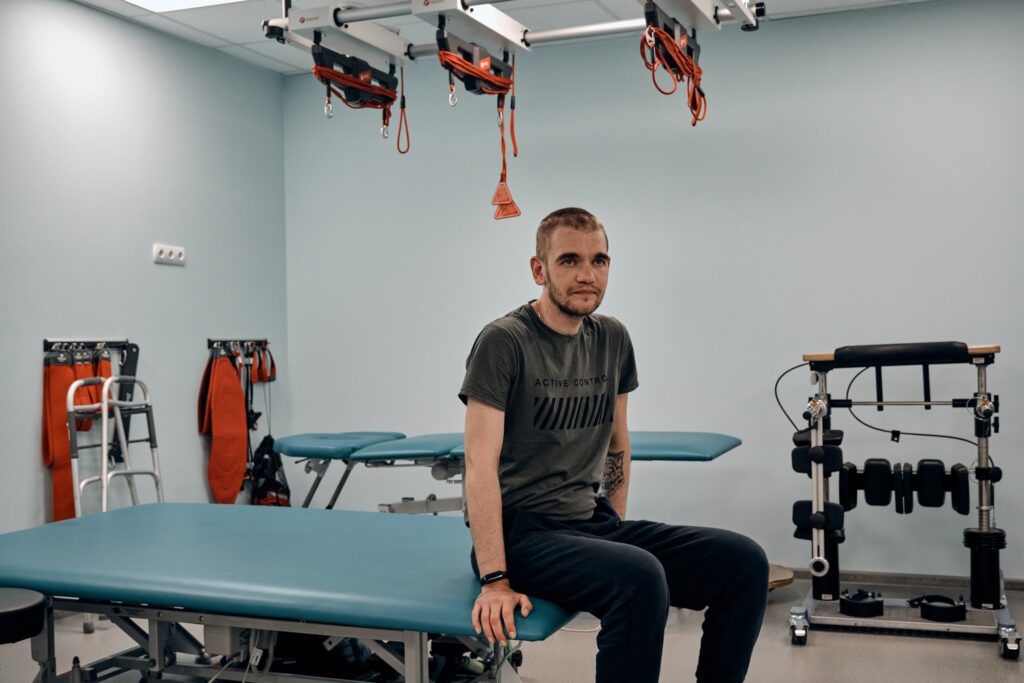
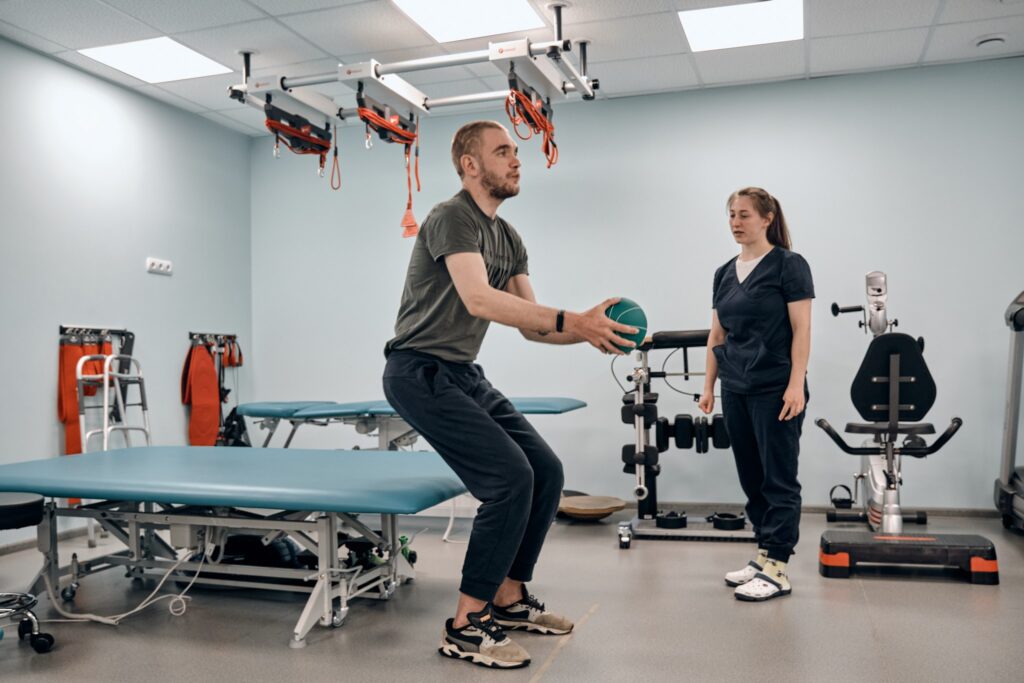
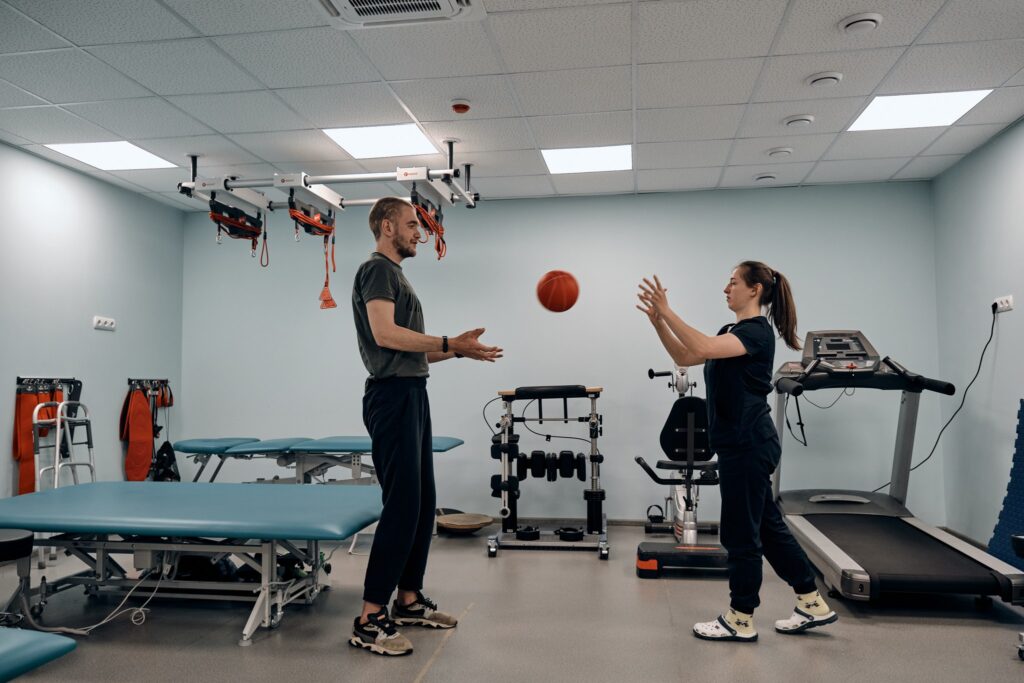
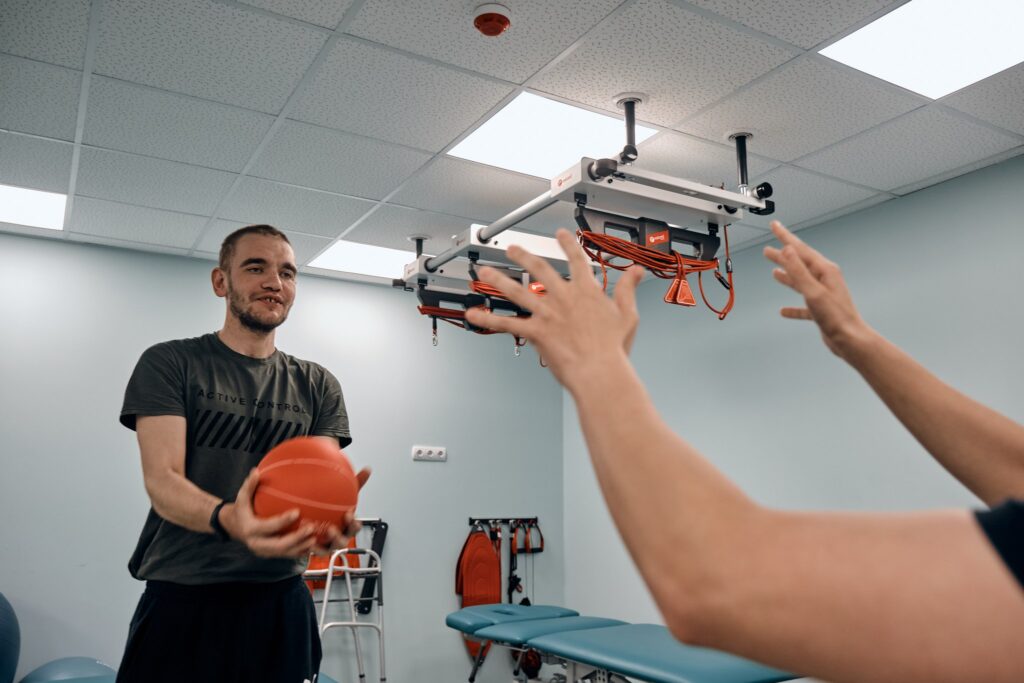
At first, it was just lifting my legs one after the other, then the same with weights, using special equipment. There were many different machines and devices—without them, my recovery wouldn’t have progressed as quickly. There were exercise bikes and treadmills, where I took my first steps.
Later, the nurse took me to the Alley of Linden Trees, where I tried walking on my own. I really like that alley. At first, I could only walk five meters. Then 10 meters, and now, a whole kilometer.
Working with Specialists
In April, during my rehabilitation, I underwent an acupuncture course—where they place needles in specific points. On the fourth session, the doctor told me, “You’ll regain your memory, vision, and hearing.” I thought to myself, “What a liar…”
I didn’t believe in a happy ending. But then, it happened. One day, I just sat up in bed, feeling like an electric current ran through me, and the memories came flooding back. So many memories. It’s a strange feeling to suddenly realize you have all these memories stored inside you.
All the while, the pain was constant. My back and pelvis hurt—it felt like someone was screwing bolts into me. The pain made me curse like a sailor. But I set a goal to stand up, and I followed the trainers’ instructions diligently.
I appreciated the attention I received during rehab. The sessions started early in the morning, and I had three, sometimes four, specialists working with me at once. No other center had given me that level of attention.
The results speak for themselves: I arrived here practically bedridden, in a wheelchair. Now, I live a full life—I drive and ride a bike.
The Paralympic Rehabilitation Center
I went to the Paralympic Sports Center in Syanky in the fifth month of my rehabilitation. I spent two months there, and by the end, I could do pull-ups and lift myself on parallel bars eight times. My next goal was to participate in a CrossFit event in honor of a fallen defender, but my coach said I wouldn’t be ready for that kind of effort until next year.
During my two months at the center, my condition kept improving.
What Happened Next
Everything fell apart when I got to Kharkiv for the military medical commission (VLC). I couldn’t visit doctors every day on my own or wait in long lines, so they admitted me to a hospital for a month. During that time, I lost all the progress I had made. I gained weight because no one was working with me—I was just lying in bed.
The pain continued to torment me, and I ended up back in the hospital, this time in neurology for treatment. After two months, I felt a bit better, but it wasn’t rehabilitation—mostly just electrotherapy without any specialized exercises.
In September, I was discharged, and until the end of the year, I attended rehabilitation sessions in Kharkiv. I was lucky to find a doctor at the regional hospital who worked with veterans for free because I had nothing left by that point. Additionally, I went for massages three times a week to address circulation issues in my legs, which have since improved.
Call Sign — Sportyk
Humor keeps me going—without it, I would’ve been lost. For instance, it was tough to accept that I had a head injury. I couldn’t shave for a long time, so my wife did it for me. By the way, we got married after my injury. Like many men, I probably needed a good kick to realize something important. And the war gave me that kick.
After everything that happened to me, I understood that long hours and days on the sports field were ahead of me because recovery doesn’t just happen on its own. “That’s it! My new call sign is Sportyk!” I declared. Some people still call me that.
My Dreams…
I have many dreams, but I don’t share them with anyone. Yet, I can tell you the main one: I WANT THERE TO BE NO WAR.
I want all my friends to return alive, and for us to live peaceful lives.
I’ve had a glimpse of both worlds, and it hurts to realize that, in the 21st century, people are still killing each other.
Dmytro Kovtun was a patient at the Uzhhorod Center of Neurosurgery and Neurology, with which we have been closely collaborating since 2022. During this time, we have provided the Center with 11 medical and rehabilitation devices worth a total of 5.6 million UAH (approx. 150,000$) and organized training for 15 doctors.
Thanks to the professional care of the specialists at the center, Dmytro successfully completed a course of treatment and rehabilitation after his injuries.
Today, Dmytro actively volunteers, drives a car, enjoys spending time with his family and wife Sasha, and his life is filled with positivity and new opportunities. His story is an inspiring example of strength and resilience.
Learn more about our collaboration with the Center here.